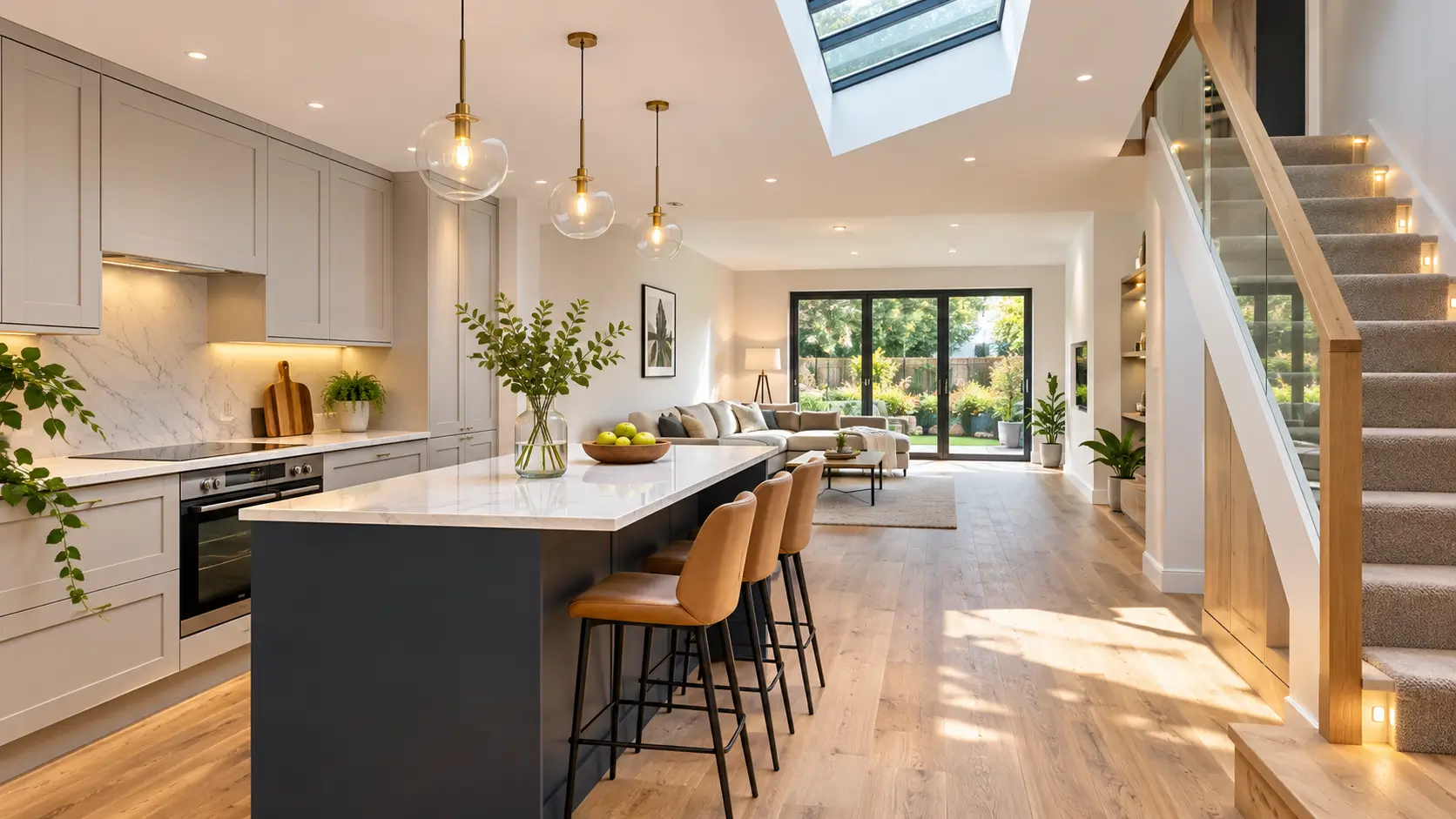
Home Renovation | Planning & Improvement Guide
Discover how professional home renovation services in Dublin can improve comfort, maximise living space, enhance energy efficiency and transform your property.
A home should evolve with the people living in it. Perhaps your kitchen feels too small, your rooms no longer suit your lifestyle, or your property needs modern improvements. Whatever the reason, renovating your home can create a more comfortable, practical and welcoming environment.
For homeowners in Dublin, a successful renovation involves more than selecting attractive finishes. It requires thoughtful planning, realistic budgeting, experienced tradespeople and careful attention to the property’s existing condition.
Whether you’re updating a single room or considering a complete house transformation, understanding the renovation process can help you make informed decisions.
Key takeaway: Professional home renovation services can improve functionality, comfort and long-term property appeal. The best results come from clear objectives, realistic budgets, suitable materials and skilled workmanship.
In This Article
- Why Home Renovation Matters
- Popular Home Renovation Services in Dublin
- Planning a Successful Home Renovation
- Understanding Renovation Costs
- Choosing Materials and Finishes
- Improving Home Energy Efficiency
- Common Home Renovation Mistakes
- Choosing Professional Renovation Contractors
- Why Consider Renov for Your Project
- Frequently Asked Questions
Why Are Home Renovation Services Important?
Home renovation services involve improving, repairing, modernising or reconfiguring existing residential properties to better meet homeowners’ needs.
A renovation might involve replacing outdated finishes, upgrading electrical systems, improving insulation or redesigning how rooms connect.
Older properties across Dublin can have unique characteristics, including traditional layouts, limited storage and building elements that may need attention before cosmetic improvements begin.
Rather than immediately considering a move, some homeowners discover that improving their existing property offers a practical alternative.
1. Improve Everyday Comfort
A well-planned renovation can make everyday activities easier.
Better lighting, improved room layouts, additional storage and modern heating controls can create a more comfortable living environment.
For example, converting a poorly organised living area into a practical family space may improve how the household uses the property without necessarily increasing its floor area.
2. Make Better Use of Available Space
Limited space is a common concern in residential properties.
Professional renovation planning can identify opportunities to improve underused rooms, awkward corners and inefficient layouts.
Built-in storage, improved circulation and carefully positioned furniture can help make existing spaces more useful.
3. Support Long-Term Property Appeal
Thoughtful improvements may make a property more attractive to future buyers.
Modern kitchens, well-maintained bathrooms, practical layouts and energy-efficient upgrades can contribute to a home’s overall appeal.
However, renovation spending does not automatically translate into an equivalent increase in market value. Location, property condition, market demand and workmanship all influence the outcome.
Popular Home Renovation Services in Dublin
Every property has different requirements. Some homeowners need targeted improvements, while others benefit from extensive renovation work.
1. Complete House Renovations
A complete house renovation involves updating several areas of a property as part of a coordinated project.
Depending on the building’s condition, work may include flooring, plastering, electrical improvements, plumbing, insulation, carpentry and interior decoration.
Coordinating these activities can help reduce unnecessary disruption and ensure that different improvements work together.
Homeowners considering extensive changes can explore Renov’s home renovation services to understand the types of residential work available.
2. Kitchen Renovations and Layout Improvements
The kitchen is often one of the busiest areas of a home.
An outdated kitchen may lack practical storage, suitable work surfaces or enough room for several people to use it comfortably.
Kitchen renovation planning can focus on:
- Improving cabinet storage and accessibility.
- Creating practical food preparation areas.
- Upgrading lighting and electrical points.
- Replacing worn flooring and wall finishes.
- Improving the relationship between cooking, dining and living areas.
The most successful kitchen designs balance appearance with daily usability.
3. Bathroom Renovations
Bathroom improvements can make a noticeable difference to comfort and maintenance.
A renovation may involve replacing sanitaryware, updating tiling, improving ventilation or creating a more accessible shower area.
Waterproofing and plumbing deserve particular attention because poor installation can lead to expensive damage later.
Durable finishes, suitable ventilation and safe electrical installations should take priority over purely decorative choices.
4. Home Extensions
A home extension can provide additional living space when the existing layout cannot comfortably accommodate a household’s needs.
Common reasons for extending include creating a larger kitchen, adding a family room or introducing a dedicated home office.
Before proceeding, homeowners should consider site constraints, structural requirements, planning permission and how the extension will connect with the original building.
An extension should feel like a natural part of the home rather than an unrelated addition.
5. Attic Conversions
An attic conversion can offer another way to make use of existing space.
Depending on the property, an attic may be suitable for storage improvements or conversion into usable accommodation.
However, not every attic can legally or practically become a habitable room.
Headroom, structural capacity, staircase access, insulation, ventilation and fire safety must all be assessed.
Practical advice: Obtain professional guidance before assuming an attic can be converted into a bedroom or other habitable space.
How to Plan a Successful Home Renovation
Good renovation planning begins before contractors arrive or materials are ordered.
Step 1: Identify Your Main Priorities
Start by listing what currently does not work in your home.
Are rooms too dark? Is storage insufficient? Do you need more living space? Are heating costs a concern?
Separate essential improvements from optional upgrades.
This helps prevent decorative decisions from taking priority over important repairs or functional requirements.
Step 2: Assess the Existing Property
Older homes may contain hidden issues that become apparent only during renovation.
Possible concerns include moisture damage, outdated wiring, deteriorated plumbing or structural alterations completed during previous ownership.
A suitable professional assessment can help identify risks before major work begins.
Step 3: Establish a Realistic Budget
Your budget should reflect the scale and complexity of the proposed improvements.
Request detailed quotations and clarify what is included.
Allow a contingency for unexpected issues, particularly when renovating older buildings.
Step 4: Understand Permissions and Regulations
Some renovation projects require planning permission, while others may qualify for exemptions.
Building regulations can apply even when planning permission is not required.
Structural alterations, extensions and attic conversions may need specialist design input and certification.
Homeowners should confirm applicable requirements with qualified professionals and the relevant local authority.
Step 5: Agree on a Project Schedule
Discuss the expected sequence of work before construction begins.
A renovation schedule may include preparation, demolition, structural work, electrical and plumbing installations, plastering, flooring and finishing.
Allow for possible delays caused by material availability, unforeseen building conditions or changes to the agreed scope.
How Much Does a Home Renovation Cost in Dublin?
There is no single price that accurately represents every home renovation in Dublin.
Costs depend on the property’s size, age, existing condition, material specifications and the complexity of the work.
A cosmetic refresh will generally involve a different level of expenditure from a project requiring structural alterations or extensive service upgrades.
Important cost factors include:
- Project scope: The number of rooms and extent of work.
- Labour: The specialist trades required.
- Materials: The quality, availability and installation requirements of selected products.
- Structural work: Any alterations requiring engineering input.
- Property condition: Repairs discovered during preparation.
- Compliance: Relevant professional assessments, permissions and certification.
A written quotation should clearly describe the agreed work, exclusions, payment stages and arrangements for changes.
Budgeting tip: Compare quotations based on the same specification rather than choosing a contractor solely because the initial price is lower.
Choosing Suitable Renovation Materials and Finishes
Materials influence how a renovated home looks, feels and performs over time.
For high-traffic areas, durability and ease of maintenance are particularly important.
Kitchen flooring should suit frequent cleaning and everyday wear. Bathroom surfaces should be appropriate for moisture-prone environments. Storage fittings should withstand regular use.
Homeowners should also consider whether finishes complement the existing property’s architecture.
A consistent combination of flooring, colours, lighting and joinery can create a more connected appearance throughout the home.
Choosing suitable products at the planning stage can reduce unnecessary replacements and maintenance later.
Can Home Renovation Improve Energy Efficiency?
Yes. Certain renovation measures can improve a home’s thermal performance and reduce avoidable energy loss when properly specified and installed.
Potential improvements include insulation upgrades, better airtightness, suitable glazing and more efficient heating controls.
However, improvements should be considered as part of the building’s overall performance.
For example, increasing airtightness without addressing ventilation can create indoor air quality or moisture problems.
Before undertaking major energy upgrades, homeowners may benefit from professional energy assessment and advice about appropriate measures.
Eligibility for Irish home energy grants should be checked through official schemes, including the Sustainable Energy Authority of Ireland (SEAI).
Energy efficiency should be planned alongside comfort, ventilation and building condition rather than treated as an isolated upgrade.
Common Home Renovation Mistakes to Avoid
Even a promising renovation project can become difficult when important decisions are overlooked.
Starting Without a Clear Plan
Changing room layouts, materials or specifications after work begins can increase costs and cause delays.
Agree on the essential design and project scope before construction starts.
Underestimating Hidden Problems
Older properties may contain issues that are not immediately visible.
Ignoring the possibility of repairs can leave a renovation budget under pressure.
Choosing Materials Based Only on Appearance
Attractive finishes are not always suitable for every environment.
Consider durability, cleaning requirements, moisture exposure and long-term maintenance.
Overlooking Storage and Lighting
A beautiful room can still be inconvenient if it lacks practical storage or suitable lighting.
Plan these features around how the space will actually be used.
Selecting Contractors Without Proper Checks
Before appointing a renovation contractor, review relevant experience, insurance, references and the proposed scope of work.
A clear written agreement can help reduce misunderstandings during the project.
Why Choose Professional Home Renovation Contractors?
Professional renovation contractors help coordinate the practical requirements involved in improving a property.
Their role may include assessing the proposed work, arranging suitable trades, planning the construction sequence and overseeing workmanship.
For projects involving several specialist activities, coordination is particularly valuable.
Electrical work, plumbing, plastering and finishing often depend on one another. Poor scheduling can result in repeated work or unnecessary disruption.
Homeowners should look for contractors who communicate clearly, provide detailed quotations and explain how unexpected issues will be managed.
The goal is not simply to complete work quickly, but to deliver improvements that are safe, functional and appropriate for the property.
Why Consider Renov for Home Renovation Services in Dublin?
Renov provides residential and commercial renovation services in Dublin, with over 15 years of experience highlighted on its website.
Its residential services include general renovations, home extensions, attic conversions, carpentry, tiling, electrical work, plumbing, plasterboard installation, insulation, painting and fitted storage solutions.
For homeowners planning multiple improvements, having access to a broad range of renovation services can simplify initial project discussions.
Renov emphasises workmanship, quality materials and professional standards.
Whether you’re considering a practical interior refresh or a larger property transformation, discussing your requirements with an experienced renovation team is a useful starting point.
Explore the company’s residential renovation services or view its renovation project gallery for examples of completed work.
Frequently Asked Questions
What is included in home renovation services?
Home renovation services can include interior improvements, flooring, painting, plastering, carpentry, plumbing, electrical upgrades, insulation, extensions and attic conversions. The exact work depends on the property’s condition and the homeowner’s requirements.
How long does a home renovation take in Dublin?
The timeline depends on the project scope, property condition, material availability and any required approvals. Small improvements may take considerably less time than complete property renovations or structural alterations.
Do I need planning permission for a home renovation in Ireland?
Not every renovation requires planning permission. However, certain extensions, structural changes and alterations to protected structures may require approval. Building regulations may also apply. Always confirm requirements before starting work.
Is renovating an older house worthwhile?
Renovating an older house can be worthwhile when the existing structure is suitable and the improvements meet the homeowner’s needs. A professional assessment helps identify potential repair costs and practical limitations.
Can I live in my house during renovation work?
This depends on the extent of the work and whether essential facilities remain safe and usable. Major structural work, extensive dust or interruptions to water and electricity may make temporary accommodation advisable.
How do I choose a reliable home renovation contractor?
Look for relevant project experience, suitable insurance, clear communication, detailed quotations and verifiable references. Confirm the scope of work, payment arrangements and responsibilities in writing.
Can home renovations increase property value?
Certain improvements may increase buyer appeal and potentially support property value. However, financial returns depend on the local property market, renovation quality and the amount invested.
Final Thoughts: Plan Your Home Renovation with Confidence
A successful home renovation is about creating a property that works better for everyday life.
From improving existing rooms to exploring extensions and attic conversions, each decision should support your long-term needs.
Careful budgeting, practical design, suitable materials and experienced workmanship can help turn renovation ideas into lasting improvements.
Rather than focusing only on how your home will look when the work is finished, consider how comfortably and efficiently it will function for years to come.
Transform Your Home with Renov – Dublin’s Renovation Specialists
Thinking about upgrading your living space?
Renov offers professional home renovation services in Dublin, including general property improvements, home extensions, attic conversions, carpentry, insulation and interior finishing.
Discuss your ideas with the Renov team and explore practical options for your property.
Call: 085 127 4741 / 01 969 0509
Email: info@renov.ie
Website: www.renov.ie
Explore Services: Home Renovation Services in Dublin
Request a Quote: Start Your Renovation Enquiry
Your dream home could be closer than you think. Start with a renovation plan built around your needs.